
1885 - 1916

CPL David Wallace Crawford
1887 - 1916

Lce-Corpl John Joseph Nickle
1894 - 1916

Pte 17911 Morton Neill
1897 - 1916

Lieut Edward Stanley Ashcroft
1883 - 1918

Lieut George William Mason
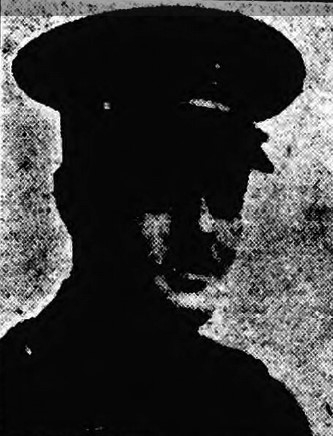
- Age: 22
- From: Ashton upon Mersey
- Regiment: The King's (Liverpool Regiment) 19th Btn
- K.I.A Monday 9th April 1917
- Commemorated at: St Martin Calvaire Brit Cem
Panel Ref: I.A.1
George William Mason was born in 1895 in Ashton on Mersey the son of William Mason and his wife Maria (née Cooper), who married in Salford in 1890 at Broughton, St John. His father was born in Bolton, and his mother in Pendleton, Lancashire. They had three children, all born in Ashton upon Mersey; George had an older sister Marjorie Cooper, born in 1892/3, and a younger brother Reginald Cooper, born in 1897.
The 1901 census finds the family living in Ashton Lane, Ashton upon Mersey, with three children, a domestic nurse, a cook, and a housemaid. His father is 39, a fruiterer and florist, employer, and his mother is 37. George is 6. Also in the household is his uncle George Cooper, 51, living on his own means.
George attended Merton House Preparatory School for Boys, in Penmaenmawr, Conway, North Wales. A postcard picturing the Chester coat of arms is found for sale online, sent in 1906 to Master Mason, Merton House School, Penmaenmawr. The reverse is not visible, but the hand written message continues on the front of the card, “… her brother will be going next term. Please give my best love to Reg and tell him I have no news for him. Love from [M.M.?]”
His uncle George Cooper, a well-known bookmaker, died in 1908, leaving a large estate, bequeathing £30,000 to his sister Maria Mason, £5,000 to his brother-in-law William Mason, and leaving his various real properties in Cheshire and North Wales in trust to his nephews and nieces, including Marjorie, George, and Reginald, until the youngest attained majority.
In 1911 George, 16, is a boarding pupil at Uppingham School in Rutland. The school was founded in 1584 and had developed into a major public school, with about 400 boys. George’s contemporaries included Edward Brittain, brother of Vera Brittain, her fiancé Roland Leighton, and the other “Uppingham Boys” Geoffrey Thurlow and Victor Richardson. All four were lost in the war. (The Great War took the lives of 450 ex-pupils and the school hall was built in their memory.)
The census shows his parents living at Huntington Hall, Huntington, near Chester. Huntington Hall is a medieval moated Manor House two and a half miles south of Chester, on 100 acres with outbuildings, cottages, gardens, and orchards. His father, 49, is described as a gentleman, his mother is 47. They have a cook, a waitress, and two housemaids. His father kept horses, a passion of George’s. Reginald, 13, is still a pupil at Merton House in Penmaenmawr.
Prior to the outbreak of war he was a partner in Mason, ship-owners, Water Street, Liverpool.
George enlisted as Private 17659, the King’s Liverpool Regiment, according to his Medal Card, battalion unknown. However, the number is one allocated to the 19th Battalion of the King's Liverpool Regiment. He was commissioned Second-Lieutenant in the 19th Battalion, The King’s Liverpool Regiment with almost immediate effect from 03rd September 1914.
Formed on 07th September 1914 the 19th Battalion trained locally at Sefton Park and remained living at home or in rented accommodation until November 1914. They then moved to the hutted accommodation at Lord Derby’s estate at Knowsley Hall. On 30th April 1915 the 19th Battalion alongside the other three Pals battalions left Liverpool via Prescot Station for further training at Belton Park, Grantham. They remained here until September 1915 when they reached Larkhill Camp on Salisbury Plain.
He crossed the Channel to France as Battalion Transport Officer, with the rank of Lieutenant in November 1915. He is first mentioned in the 19th Battalion War Diary on 08th February 1917,when he left the Battalion, which was then in the trenches at Agny in northern France, to attend a course at the VII Corps Lewis Gun School. He returned to the Battalion eight days later.
He was killed in action on 09th April 1917, aged 22.
Details of the action of 09/04/1917:
The First Battle of the Scarpe was set for Zero hour 5.30 a.m. amongst heavy snowfall during the 9th and 10th at 3 p.m the 19th Advance began
The 19th Battalion was not committed to action until the early afternoon of the 9th, and its objectives were the German Trench System immediately in front of its positions, the village of Heninel itself and the high ground beyond it. The advancing waves moved forward with determination and good spirits. On schedule they passed through Henin towards St Martin despite a German barrage put down on both village’s. Attacking waves of the 19th Btn got within 100 yards of the German Wire but were held up in No Mans Land because the three belts of of entangled wire uncut by our Artillery, nothing could be done but to take shelter in the many shell holes pitted there, the 19th Battalion losses were very heavy and at 9.30 p.m. the 19th were ordered to withdraw, so that their Artillery could cut the enemy wires during the night ready for another attack on the 10th. Orders were then given to extend their positions right and left, and a Trench was dug from the St Martin Heninel Road, to the nearby River Cojeul. By midnight the troops were withdrawn from the trenches, as the German wire was to be shelled and the Battalion was too close for its own safety. By this time, the Battalion had suffered casualties amounting to six Subalterns and two hundred and seventeen other ranks. Lieutenant Mason was killed at some point during the day. "
George now rests at St Martin-Calvaire British Cemetery, France at Plot 1, Row A, Grave 1.
The village of St. Martin-sur-Cojeul was taken by the 30th Division on 9 April 1917. It was lost in March 1918 but retaken in the following August. St. Martin Calvaire British Cemetery was named from a calvary which was destroyed during the war. It was begun by units of the 30th Division in April 1917 and used until March 1918. Plot II was made in August and September 1918. The cemetery contains 228 Commonwealth burials of the First World War, five of them unidentified. There are also three German graves within the cemetery. The cemetery was designed by Sir Edwin Lutyens.
His father's death was reported in the Manchester Evening News on 12th May 1917, little over a month after George's death;
MASON - On May 10 at Huntingdon Hall, Chester, WILLIAM MASON, beloved husband of Maria Mason in his 56th year. Interment at Brooklands Cemetery, Sale, Manchester, Monday May 14 at 1 pm.
His death was reported in the Liverpool Daily Post on 20th April 1917
"News has been received of the death in action at the front of Lieut.Geo.W.Mason, King's (Liverpool Regiment), son of Mr.W.Mason,of Huntington Hall, Chester. The deceased, who was twenty two years of age, before joining the army in August,1914, was a partner in the firm of Messrs.Mason, shipowners,Liverpool. He went to the front a year last November. A younger brother is in the machine-gun corps of the South Lancashire Regiment, and he has been wounded. Letters received from his brother officers state that he was killed instantly when leading his men in an attack on the 9th inst., and tributes are paid to his zeal, efficiency, and courage as an officer."
In Memoriam notices are found in the Newspaper Index Cards (dates not known):
“In proud and loving memory of George William Mason, Lt., the 19th King’s Liverpool Reg’t., killed in action while leading his men on Easter Monday, April 9, 1917, aged 22.
He died the noblest death a man may die,
Fighting for God and Right and Liberty,
And such a death is immortality.”
“In proud and loving memory of my elder brother George William Mason, Lt., The King’s Liverpool Reg’t., for whom the door opened while leading his men in action on Easter Monday, April 9, 1917, aged 22. He loved horses. - Reginald.”
Probate, giving George’s address as Huntington Hall, in the amount of £26,761-14s-19d ( which equates to £1.6 million in todays value) was granted at Chester on 08th May to Peter Gregson, chartered accountant (who appears to be the family accountant).
George earned his three medals, which were sent to his mother, Mrs. Mason, c/o Peter Gregson & Son, 44 Brown Street (King Street), Manchester.
Soldiers Effects to Exec. Peter Grayson Esq., no Pension record found.
His father died one month after the death of his son, on 10th May 1917, aged 55, leaving effects of over £14,000.
His brother Reginald went to France on 07th June 1915. He served in the 3rd S. Lancs Regiment, attached to the Lancashire Fusiliers. He also earned three medals; his Medal Card shows, Silver War Badge, pending.
His mother left Huntington Hall in 1919. She moved to Bournemouth in 1925 and lived at “Ravenscliff” in Grove Road. Her body was found drowned 100 yards west of Boscombe Pier on a Sunday morning in December 1928, following her disappearance the previous day. Her son Reginald Cooper Mason of Bayswater, London, who gave evidence at the inquest, stated that his mother had far more money than she needed and had no troubles “except those caused by losses in the family during the war”, and did not think she had committed suicide. She was aged 65.
Sadly, George’s medals and Memorial Plaque, in a leather case, and Reginald’s medals were sold at auction as a family group in 2016, for £1,000.
George is commemorated on the following memorials -
Merton House School, Penmaenmawr (lost)
Uppingham School War Memorial.
And on the family gravestone in Sale Brooklands Cemetery.
We currently have no further information on George William Mason, If you have or know someone who may be able to add to the history of this soldier, please contact us.
Killed On This Day.
(110 Years this day)Saturday 28th October 1916.
2nd Lieutenant Ernest Bailey
24 years old
(110 Years this day)
Saturday 28th October 1916.
2nd Lieutenant Stafford Thomas Eaton-Jones
20 years old
(110 Years this day)
Saturday 28th October 1916.
2nd Lieutenant Ronald Hamilton William Murdoch
21 years old
(110 Years this day)
Saturday 28th October 1916.
2nd Lieutenant James Stewart
39 years old
(109 Years this day)
Sunday 28th October 1917.
Serjeant 38645 John McGlashan
32 years old
(108 Years this day)
Monday 28th October 1918.
Pte 12056 Sandford Woods
30 years old
(108 Years this day)
Monday 28th October 1918.
Rifleman 22814 Charles Reginald Pollington
30 years old