
1885 - 1916

CPL David Wallace Crawford
1887 - 1916

Lce-Corpl John Joseph Nickle
1894 - 1916

Pte 17911 Morton Neill
1897 - 1916

Lieut Edward Stanley Ashcroft
1883 - 1918

Pte 23889 John Alexander Bennett
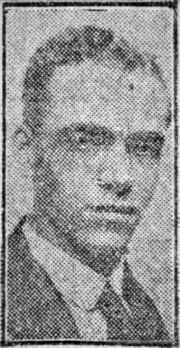
- Age: 26
- From: Liverpool
- Regiment: The King's (Liverpool Regiment) 20th Btn
- D.O.W Tuesday 7th March 1916
- Commemorated at: Corbie Cc
Panel Ref: I.D.2
John Alexander Bennett was born in Liverpool in 1891 and was baptised 12th March, 1891 at St George's Church, Everton. He was the son of George Nelson Bennett and his wife Elizabeth Henrietta (née Roberts) who were married on the 01st August 1887 at St Mary's Church, Walton. At their marriage, George, was 25 and, Elizabeth, gave her age as 19, but it appears she was born in 1871, meaning she was about 16 when she married. Her age, as well as her first name, varies on records.They had five children, three of whom sadly died young.
The 1891 finds the family living as boarders at 196 Netherfield Road in the home of James MacKnaught (possibly incorrectly recorded or transcribed), and his family. He is a milkman's carrier. John A. is a new born baby, his father George Nelson Bennett is a 27 year old milkman's carrier born in Liverpool, whilst his mother, Elizabeth is 21 years of age and was also born in Liverpool. John has an older brother George Nelson jr he is aged 3. His parents are not found on the 1901 Census (it is not known when his father died), but John and his brother George are found in the Albert Industrial School (a reform school) on Corporation Road in Birkenhead. John, 10, is a woodchopper, and George 12, is a bread maker (many of the young inmates have the same occupations). Reform schools were designed to provide some schooling for children placed by the courts or deemed at risk (due to school truancy, living on the streets, etc.) (Everton legend Dixie Dean later voluntarily attended Albert Industrial School in order to play football with their well-regarded team.)
His father is last recorded on the electoral roll in 1894 at 97c Robsart Street, Everton.
The 1911 Census finds the family living at 56 Stonehill Street, Anfield, Liverpool. He is shown as, Alexander, a 20 year old ships waiter living with his widowed mother and his brother. His mother is recorded as being 38 years of age, whilst his brother George N. is shown as a 21 year old ships waiter. There is also a boarder in the household, probably a fellow crew member of the brothers as he is Arthur Dejong a 32 year old married man and a ships waiter. (He was to marry John's mother Elizabeth Henrietta in December 1917).
Arthur De Jong and George Nelson are found on a crew list together serving with the City of Dublin Steam Packet Company in 1907. Arthur De Jong served in the Merchant Marine throughout the war.
John Alexander Bennett enlisted in Liverpool as Private 23889 joining the 20th Battalion of The King’s Liverpool Regiment. Either John's name was mistranscribed or he enlisted under the name Arthur, as all his military records show this forename. His CWGC record, however, does not give an alternate name (i.e, served as).
Formed in November 1914 the 20th Battalion were originally billeted at Tournament Hall, Knotty Ash before on 29th January 1915 they moved to the hutted accommodation purposely built at Lord Derby’s estate at Knowsley Hall. On 30th April 1915 the 20th Battalion alongside the other three Pals battalions left Liverpool via Prescot Station for further training at Belton Park, Grantham. They remained here until September 1915 when they reached Larkhill Camp on Salisbury Plain. He reached France on 07th November 1915.
In early March 1916 the battalion took up position in the trenches at Maricourt. Heavy snow fell on the 04th. The night of 06th/07th was quiet. The battalion War Diary records for 07th March -5:20 p.m. Enemy artillery shelled the RIGHT GROUP, sending over 30 to 40 heavy shells at 40 second intervals. The fir[ing?] seemed to be directed particularly in this GROUP against the MINE HEAD A.P.I. and BOLD STREET entrance to 29 Trench. Casualties: Killed 2 O.R., Wounded 7 O.R.Two enemy machine guns fired occasionally along F.T. 31 and 30.
He died of his wounds on 07th March 1916, aged 26 years.
His death was reported in both the Liverpool Evening Express and Liverpool Echo on 25th March 1916:
Private A. (Alec.) Bennett, 23889, of the 20th Liverpool ("Pals") No.4 Company, has been killed by a bullet shot. A letter to his mother from his captain, whose orderly he was, says the young soldier had returned to them only the day before, following a previous wound. Private Bennett, who was well known in the Stanley district, had served as a steward with the White Star and Cunard companies, and as a keen sportsman he was a member of the Laconia's football team. It is a tragic circumstance that eight members of the Laconia team have been killed during the war.
Arthur De Jong was charged with absenting himself from his ship as reported in the Liverpool Journal of Commerce on Monday 26th March 1917
WARRANTS WITHDRAWN.
The question of the expenses incurred in the execution of warrants for the arrest of absentee seamen cropped up again at the Southport Police Court.
Arthur De John(sic), a steward, of Ronald-street, Liverpool, was charged with absenting himself from his ship without leave, Mr. Kule, on be-half of the shipping company, intimated that his instructions were to withdraw the charge.
Chief-Inspector Allison pointed out that the town had been put to an expense of upwards of £4 in bringing the man from Liverpool.
The magistrates' clerk reminded the court that there was some discussion on the question at the hearing of a previous case, and Mr. Kule consented to consult his clients on the matter. The present case, however, was entirely different from the others, and he thought the company ought to pay.
The prisoner was discharged.
John Alexander now rests at Corbie Cemetery, Grave I D 2, where his headstone bears the epitaph:
"HE GAVE HIS YOUNG LIFE FOR ENGLAND HIS MOTHER'S GREATEST LOSS"
Corbie was about 20 kilometres behind the front when Commonwealth forces took over the line from Berles-au-Bois southward to the Somme in July 1915. The town immediately became a medical centre, with Nos 5 and 21 Casualty Clearing Stations based at La Neuville (the suburb across the Ancre) until October 1916 and April 1917 respectively. In November 1916 the front moved east, but the German advance in the Spring of 1918 came within 10 kilometres of the town and brought with it field ambulances of the 47th Division and the 12th Australian Field Ambulance. The communal cemetery was used for burials until May 1916, when the plot set aside was filled and the extension opened. The majority of the graves in the extension are of officers and men who died of wounds in the 1916 Battle of the Somme. The remainder relate to the fighting of 1918. The communal cemetery contains 249 First World War burials, the extension 918. The extension was designed by Charles Holden. CWGC gives his age (provided by the family) as 26, but based on his birth registration and baptism, he had just turned 25He earned his three medals (issued in the name Arthur and not returned for adjustment).His outstanding Army pay of £2 12s 1d and a War Gratuity of £5 went to his mother Henrietta de Jong.The pension card (giving his name as Arthur) in the name of his mother, Elizabeth De Jong, at 27 Ronald Street, Old Swan, shows that she was awarded a dependent's pension of 10 shillings a week for life from July 1919.
John's mother featured in an article concerning the Remembrance Service of 1920 in the Liverpool Evening Express on Thursday 11th November 1920:
THE GREAT SILENCE.
How It Was Observed In Liverpool.
STATUESQUE CITY.
Citizens’ Solemn Tribute to the Dead.
Armistice Day was observed in Liverpool and district with all solemnity. During the two minutes’ silence all traffic stopped and everywhere there was a solemn hush.
The members of the City Council went in procession to St Nicholas’ Church, where an appropriate sermon was delivered by the Lord Bishop.
In London crowds filed past the Cenotaph, which was unveiled by the King, and everywhere in that vast capital of the Empire tribute was paid in solemn silence to the nation’s fallen.
The interment in Westminster Abbey of the unknown warrior was the occasion of one of the most impressive scenes ever witnessed, even in that historic edifice.
So sacred was the impressive scene in Liverpool that it seems almost a desecration to attempt to describe it. The city stood still, stood to attention, united in a grand salute the like of which history cannot show - a salute that was reverence, homage and love combined.
The impressive feature of the great silence as it was observed in Liverpool was its extraordinary universality. There was no doubt, no hesitation, no abstention. Every citizen, no matter what his or her station in life or the age, at that magic moment agreed upon by the nation was mute and motionless.
No more striking example could be cited than the main streets, where traffic throbs throughout the day and where the pulsations of city life are most strikingly reflected. Here, then, what happened at this eleventh hour of the eleventh day of the eleventh month this morning ?
The policeman stands at point duty semaphoring traffic this way and that. Tram-cars, motors, lorries, handcarts are all pressing their way, and in between them one sees pedestrians shouldering and threading a passage across the road. There is a report. It is the promised maroon[rocket] from the neighbouring police station. Everyone knows what it is, but nobody says so. The policeman has now held up both his hands, a signal that is evidently well understood by those drive, for every vehicle instantly comes to a standstill. All motor engines are stopped, and the horses in the shafts look wistfully, almost sadly, around. We do not forget that they too had their comrades in the great war who made the supreme sacrifice as heroically as any. And one can but admire these great muscular animals as they stand to the grand salute along with the rest of us.
ALL HEADS BARED.
The two minutes’ silence is touching all our hearts.
Every human head is instantly bared. And a great paralysis comes upon us. In the very centre of the road is a boy between the shafts of a handcart with bowed head, and a ragged cap gripped tightly in his hand. The pose is natural but fully picturesque. On the pavement edge stands a crippled soldier handing out leaflets. His hand is extended offering one of the sheets and the man approached stands facing him, waiting for the two minutes’ silence to elapse – a perfect little tableaux. Lost in the crowd whose progress had been suddenly arrested is a lady, young but fragile looking, dressed in black. She is on one knee. One is ashamed to have noticed this poor soul, typical, alas, of so many thousands whose lives have been seared by the tragedy of the European cataclysm. Flag-sellers on the pavement have suspended their operations and become living statues. Acquaintances who have just met and are having a chat instantly have ceased speaking, and two such men stand there at hand grips. There may have been a deeper meaning behind the handshake than appeared on the surface.
Not a sign, not a sound marred the salute of silence. And when all was over, and the maroon again broke the spell, one could but notice the impression had been made on all sides. The stirring of deep and sacred memories was reflected on every countenance. The poet tells us that it is women’s part to weep. To-day many men in the streets of Liverpool were weeping too.
IN THE WORKSHOPS.
As soon as the maroon sounded at 11 o’clock all departments of the “ Courier ” and “ Express ” staffs ceased work, remaining in silence until the allotted two minutes had elapsed.
As in the streets, so in the workshops, the business houses, the schools, and indeed at every place where human beings were assembled. Even the railway stations, where hustle and bustle are fundamental, there was a great stillness. For the space of two minutes there was no business done. No tickets were to be had, no lost time could be made up, all avenues to anywhere were closed, not by gates, but by common consent.
In the General Post Office, Victoria-street, there was a remarkable scene. In the “C.O.," as the sorting or circulation office is called, the whole staff of some hundreds sang the National Anthem and then relapsed into silence for the allotted space. In the main hall, where the counter business is transacted, officials and public alike stood facing each other in a state of immobility, with money left lying on the counter and postal orders and stamps similarly lying in their condition of suspended animation. Upstairs, where the public have no access, the sudden stopping of the batteries was of a most dramatic character, and the unusual silence that followed, where ordinarily silence is unknown, brought home to all the touching character of the demonstration.
At the Municipal Offices the occasion with observed with due solemnity, all the activities ceasing while the period elapsed.
There was a very simple but nevertheless impressive observance at the Education Offices, where the staff were assembled in the chief committee-room, and the silence was preceded by the solemn reading of the names from the roll of honour of this branch of the municipal service.
Silence reigned in the clubs and hotels, and in the cafes also friends met to spend solemn moments in each other’s company and with thoughts running in unison.
Throughout the city and suburbs the churches were thrown open, and many people entered to pass the two minutes in silent prayer.
CIVIC PROCESSION THROUGH THE STREETS OF THE CITY.
The solemnity of the occasion was heightened this year by the civic procession from the Town Hall to St Nicholas’ Church. From 10 o’clock onwards large crowds of people assembled on the Exchange Flags and in front of the Town Hall. Meanwhile the police band played selections on the Exchange Flags. Punctually at 10.55 the Lord Mayor, in full regalia, left the Town Hall accompanied by Lord Bishop (Dr Chevasse), Major-General Sir Reginald Barnes, K.C.B., D.S.O., General Officer Commanding the Lancashire Territorial Division, the leader the Council (Sir Archibald Salvidge, K.B,E,), the ex-Lord Mayor and past Lord Mayors (in order of seniority), the Town Clerk, etc.
The procession was fully representative of the city’s manifold interests. Besides the City Magistrates, Aldermen and Councillors, the countries who helped us in Great War were represented by their consuls. The vice-chancellor of the Liverpool University (Dr A. Adami) was accompanied by other professors. all wearing their robes. The various commercial associations were represented by their presidents. Mr William Simpson, the Liverpool Postmaster, and the heads of other public services attended, together with other prominent citizens.
Except for the bright uniforms and robes of office worn, it was a black clothed procession, with reverent and stately mien[appearance]. It was headed by the mounted police with nodding white plumes, followed by police band, officers and men of the Air Force, Army and Navy, and Territorial Force.
The Lady Mayoress accompanied the procession in the Mayoral carriage.
Following at a short distance, and not in procession, was a woman in mourning. She was the mother of the late Private A. Bennett of the Pals’ Battalion[Pte John Alexander Bennett 23889 20/K.L.R.] She had previously collected subscriptions from the mothers and sweethearts of Liverpool men killed in the war, and had placed a wreath of laurel leaves and chrysanthemums around the Roll of Honour of the Liverpool Pals, 20th K.L.R., which hangs in the Town Hall. Underneath she and other mothers and sweethearts had subscribed their names.
After leaving the Town Hall the band played the hymn “ Onward, Christian Soldiers.” The procession proceeded down Water-street, and was a short distance from St Nicholas’ Church when the booming of the Mersey gun heralded the hour of 11 o’clock, when there was a great pause. Even the horses of the mounted police remained still, heads were uncovered, and for 120 seconds no sound was heard.
AT THE TOWN HALL.
In front of the Town Hall, where many people were assembled, the only sound was the crying of a baby carried by a young woman whose husband occupies a nameless grave in France. There were many women in the crowd, young and old, and during the pause some of them could be seen weeping silently. The great stillness over, the procession proceeded to St Nicholas’s Church, where a guard of honour of war orphans were lined up from the entrance to the churchyard to the church entrance.
“AND THERE WAS A GREAT CALM.”
There had been years of Passion –-caustic, cold-
And much Despair, and Anger heaving high,
Care whitely watching Sorrows manifold,
Among the young, among the weak and old;-
And the Spirit of Compassion whispered, “ Why? ”
Calm fell. From Heaven distilled a clemency;
There was Peace on earth, and Silence in the sky:
Some could, some could not, shake off misery:
The Sinister Spirit sneered: “ It had to be ! ”
And again the Spirit of Pity whispered “Why?”
THOMAS HARDY in the “ Times.”
The scene was most impressive on the Exchange Flags. From a quarter to eleven the press of people congregating on this great assembly ground of commerce increased until at 11 o’clock there must have been several thousand people there. This huge assembly with one movement became bare-headed, and the silence which followed was so oppressive that one gentleman observed, “ I felt that I wanted to shriek out. ”
At the Cotton Exchange several hundred members were assembled, the lady friends were permitted in the galleries overhead. Just before the signal was sounded, what is known as the pit was full of men. The air was filled with the hoarse shouting of bidders, when, with the booming of the gun, the great hush fell upon the assembly, heads being reverently uncovered. Following the silence, the members sang the first verse of the National Anthem. This scene was typical of the other Exchanges – Corn, Stock, Produce and Fruit.
IN ST NICHOLAS CHURCH.
AN IMPRESSIVE AND STRIKING SCENE.
With the sunlight streaming through the stained-glass windows into the half-dim interior, and the roar of the outside world stealing but faintly to the ears, the great silence came with a double impressiveness to the worshippers awaiting in St Nicholas’ Church the arrival of the procession. The low murmur of voices, the rustling dresses, the occasional hacking cough, changed to stillness, broken only by the sound of a horse’s hoof in the street outside, as the congregation bowed their heads in homage.
Boom ! And as the organ broke into the solemn strains of the Marche Funebre, stealing through the open doorway came the distant notes of a band, the triumphant battle song of the Church, “ For all the Saints. ”
Brief and simple was the service conducted by the rector (Rev G. W. Hockley) of thanks to He who gave the victory of remembrance of the dead, and of prayer and re-dedication. There was no choir, but none was needed with such a congregation.
Bishop’s Sermon.
“ Honour to whom is due, ” was the text chosen by the Bishop in his address, a reminder of the meaning of the commemoration of the Armistice.
The great silence by which the valiant dead were honoured was, he said, not merely an act of grief but an act of faith that they were not dead but alive for ever. The Cenotaph told the nation to honour the self-sacrifice of those who gave their lives for us. To-day it seemed as if the country was beside itself, as if we had learned nothing from the war, but were slipping back to an even worse state affairs than six years ago. He told us it was high time to seek to save our country, as our gallant dead did, by self-sacrifice. That unknown soldier, who was to-day being laid to rest in the great Abbey with the King as chief mourner, was laid there as the nation’s homage to its unknown benefactors.
The great thing that was due to the dead, besides the silence, and the cenotaph, and the State funeral, was to honour them by not allowing them die in vain. We must speak for righteousness, and purity, and truth, and not stand by like craven cowards when they were being besmirched. By deeds we must keep alive the great traditions they handed down; by pure, clean, righteous Christlike lives, seeking to purify and help our country in her day of need to complete the work that had fallen from their lifeless hands.
The National Anthem was sung at the close of the service.
On the 1921 Census at Ronald Street, Arthur De Jong is aged 41, a Cunard ships waiter, but out of work, mother Elizabeth is aged 48.
John Alexander Bennett is commemorated on the following Memorials:
Hall of Remembrance, Liverpool Town Hall, Panel 14 Right
St. Anne's Church, Stanley, Liverpool.By 1939 his mother, Elizabeth H De Jong, was widowed, and still living at 27 Ronald Street. She gave her occupation as a retired variety artist and her birth year as 1875 (making her 64).His mother died in 1941, aged 75.
We currently have no further information on John Alexander Bennett, If you have or know someone who may be able to add to the history of this soldier, please contact us.
Killed On This Day.
(110 Years this day)Monday 23rd October 1916.
Pte 37251 James Sanderson
28 years old
(109 Years this day)
Tuesday 23rd October 1917.
2nd Lieut Robert Stephenson Parry
24 years old
(108 Years this day)
Wednesday 23rd October 1918.
Pte 35226 Adam Alexander Russell
22 years old