
1885 - 1916

CPL David Wallace Crawford
1887 - 1916

Lce-Corpl John Joseph Nickle
1894 - 1916

Pte 17911 Morton Neill
1897 - 1916

Lieut Edward Stanley Ashcroft
1883 - 1918

Pte 57615 Fred William Preddy
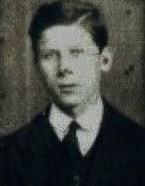
- Age: 23
- From: Rotherham, Yorks
- Regiment: The King's (Liverpool Regiment) 18th Btn
- D.O.W Sunday 16th June 1918
- Commemorated at: La Capelle-en-thierache
Panel Ref: Concentration
Born on Tuesday, 28th August 1894 in Masbrough, Rotherham, Frederick 'Fred' William Preddy was one of seven children born to parents Absalom and Mary Jane Preddy (nee Williams). He was baptised on Sunday 02nd October 1898 at St. James’ Church, Mangotsfield.
The family were living in Northcote Road, Mangotsfield in 1901 but by 1911 he was employed as a boiler driller, living once again back in his birthplace of Masborough at 91 Henley Grove together with his parents and four of his siblings.
At the outbreak of World War 1 Frederick was working as a Postman and enlisted, probably in Dewsbury, Yorkshire, on or near 6th October 1915 and joined the 3rd/1st West Riding Divisional Cyclist Company (WRDCC) a Reserve unit of the Territorial Force that was until the WRDCC was absorbed into the Army Cyclist Corps (ACC). Fred, and the rest of his 3rd/1st WRDCC pals thus transferred into the ACC, and therefore into the regular army.
Frederick was likely to have been transferred to the 18th (2nd City) Battalion, The King's Liverpool Regiment – aka 'The Liverpool Pals' - as Private 57615 in No.2 Company during November 1915. This is based on the fact that two other Army Cyclists Corps soldiers within the same sequence of service numbers - #57610 and #57613 – were also transferred to The Liverpools in the same month. Following lengthy training at Chiseldon, near Swindon (the ACC's training HQ), this group of Liverpool Pals travelled to Folkestone about 4:30 p.m. on 29th December 1916, where they boarded a troop ship for France. On their arrival at the British Base Camp at Etaples, they joined up with their unit, having been sent to France as replacements to cover the heavy losses the Battalion had experienced during the fierce fighting around Gueudecourt during the Battle of the Somme.
Frederick Preddy joined the 18th Battalion of The King’s Liverpool Regiment in December 1916 as a replacement following the 18th's heavy losses on the Somme some five months earlier.
Frederick Preddy saw action in the Battle of Arras from 9th. April-16th May 1917 then the Battle of Passchendaele from 31st. July-10th November 1917. March 1918 saw The King’s Liverpool Regiment billeted at Fluquieres as part of the 89th Infantry Brigade where they received training until 20th of the month.
On Thursday 21st March at 4:45 a.m. the enemy attacked and at 4:50 a.m. when the order “Man Battle Stations” was received with all the Companies and Transport falling in on “Alarm Posts”, with the whole Battalion (with echelon 'A' of the transport) later marching to Vaux, Foreste and Germaine. The morning was very misty as the Battalion arrived at Steenwood without being fired on by enemy aircraft or shellfire. The Battalion strength was then 119 Officers and 513 Other Ranks with its Headquarters set up close to the HQ of the 90th Infantry Brigade with a party sent into nearby Vaux to find suitable billets.
On their return they reported that the village was clear of troops and then guided the Companies and Transports to huts and hard standing previously occupied by the 17th Btn. Manchester Regiment. Battalion HQ was then connected to 90th Infantry Brigade HQ by telephone line. About 11:30 a.m. a message was received from the 90th Infantry advising that the enemy had infiltrated the forward position and that the Barrage Redoubt had been silenced by enemy artillery. The positions at Manchester Hill and L'Epine de Dallon were just about holding out, so it was decided to move out of Vaux about 11:45 a.m. as the enemy artillery had started to shell the village
About 2:00 p.m. it was reported that the Germans had penetrated the Battle Zone around Roupy so it was decided to dig-in and defend their position. A line of trenches was then dug from Steenwood with a defensive flank covering Vaux. Companies were dispersed as follows : Right – No.1; Left - No.3: Defensive Flank - No. 2 (Preddy's company): in Reserve – No. 4 in sunken road below Steen Wood. Hostile enemy planes reconnoitred the position about 7:00 p.m. flying low and firing on the troops. Shortly afterwards Vaux was heavily shelled and due to this No. 2 Company on the left were withdrawn to the Sunken Road. Close touch was maintained with 90th Infantry about the situation in the Battle Zone through the HQ of the 90th Infantry Brigade thgroughout the night. The enemy was reported to be in possession of Savy but had not succeeded in penetrating the defences of Etreillers held by the 2nd Btn. Royal Scots Fusiliers. About 10:00 p.m. all Transport was ordered to Beauvois to take the 89th Infantry to the rear. Rations were received about mid-night.
Friday 22nd March 1918. The G.O.C. of 90th Infantry Brigade called on the Battalions for carrying parties for the 2nd Battalion Bedfordshire Regiment, holding the 'D' North Sector of the Battle Zone and 59 men of No. 4 Comoany under 2nd Lr. J.A. Fisher were despatched to Stevens Redoubt carrying Small Arms Ammunition and grenades. This party left about 9:00 a.m. and returned to the Redoubt to assist in its defence. About 10:00 a.m. the G.O.C. the 90th Infantry Brigade reported that the enemy had succeeded in penetrating the left of the forward system in 'D' North Sector and he called for two Compoanies to counter-attack under the direction of O.C 2nd Bedfordshire Regiment.
Capt.R.S. Villars left immediately for Stevens Redoubt to confer with the O.C 2nd Bedfordshire Regiment leaving the Adjutant Captain F. Lawless at Battalion HQ to maintain liaison with the 90th Infantry Brigade and to control the Reserves. About 10:30 a.m. No's 2 & 3 Companies under Captain J. Lawson and Capt. F.M. Sheard MC respectively moved along the valley of the Germaine River to Stevens Redoubt. On their arrival in the forward system of 'D' North the situation was so serious it was decided that they would abandon the proposed counter-attack, with these Companies retained for the defence of the Redoubt. They remained there fighting with the 2nd Bedfordshire Regiment until the garrison withdrew in the afternoon.
About 8:00 a.m. the G.O.C 90th Infantry Brigade called on the Battalion for a reinforcement for the 2nd. Btn. Royal Scots Fusiliers, holding the village of Etreillers, and No. 1 Company under Capt.J.S. Edwards was despatched immediately. This Company fought under the command of the O/C 2nd Btn Royal Scots Fusiliers until the withdrawal from the Battlezone later in the afternoon. About 10:00 a.m. a second carrying party of 50 men of No. 4 Company was sent with Small Arms Ammunition and grenades to Stevens Redoubt. This party under 2nd Lt. H.Derbyshire returned to Battalion HQ about 2:00 p.m.
From 1:00 p.m. onwards the enemy increased his pressure on the Battle Zone and were reported as having taken possession of Roupy. About 2:00 p.m. the O.C 2nd Btn Royal Scots Fusiliers at Etreillers and the O.C 2nd Btn Bedfordshire Regiment at Stevens Redoubt reported their positions 'were satisfactory' for the time being. At the same time news was received that the Brigade on the left, around Attilly and the southern end of Holnon Wood was withdrawing to the line of trenches runing from Vaux to Ville Eveque, and shortly afterwards the O.C 2nd Btn. Royal Scots Fusiliers reported a rearward movement by the 21st Infantry Brigade from the 'D' South Sector. At about 3:00 p.m. the O.C 90th Infantry Brigade and his staff and Artillery Liaison Officer left by car for Auroir.
Around 3:15 p.m. Capt. F. Lawless communicated with the O.C 2nd Btn Royal Scots Fusiliers and the O/c 2nd Btn Bedfordshire Regiment at Etreillers and Stevens Redoubt respectively, and advised them of the situation. The Officers asked for modifications in the British Artillery barrage – in the case of Etreillers - to bring it close to the village, and in the case of the other positions, to bring it round the flanks of the Redoubt. Barrage lines in accordance with their requirements were at once drawn up and communicated to the Artillery, who commenced to shell them.
About 3:45 p.m.the O.C 2nd Btn Royal Scots Fusiliers reported trhat the 21st Brigade on his right were falling back, probably as a result of the withdrawal on the left to the Vaux-Villeveque line. Captain F. Lawless informed him the intention was to hold Etreillers upon which the fall back on the left was pivoting, and the O/C 2nd Btn Royal Scots Fusiliers accordingly sent a number to the Battalion on his right, informing them of his intention of holding Etreillers and asking them to hold on. About 4:00 p.m. a message was received from the 90th Infantry Brigade that a withdrawal to Ham had been decided upon and Battallion Commanders would hold on until dark or withdraw at onvce, at their own discretion. Captain F. Lawless communicated this message to O.C 2nd Btn Royal Scots Fusiliers and the O.C 2nd Bedfordshire Regiment, as the flanks had apparently given way they were to withdraw at once.
Neither of these battalions had received further orders from the HQ of the 18th Kings Liverpool Regiment, so an order to withdraw to Ham was given to Battalions at Vaux. The movement of the varioius Battalions was given to the Artillery Group covering the sector and the Adjutant of that group was requested to pass on the decision of the Battalion Commanders to withdraw at once to the 30th Division in the 90th Infantry Brigade, as it was no longer possible to get communication direct from Vaux. Telephone instruments were then smashed with all documents and maps destroyed. The shelling on Vaux was very heavy at this time but the withdrawal was made in good order and with little loss via Tetard Wood – Aurooir - Briston Copse.
Operations at Ham on the Somme, Northern France – Arriving at Ham about 7:30 p.m., Captain F. Lawless reported to G.O.C 89th Infantry Brigade and was instructed to occupy a defensive position near the Town in support of the 21st Entrenching Battalion. With no news being received of Capt. R.P. Villars, Capt. Lawless assumed command of the 18th Kings Liverpool Regiment. Work began at once in digging in. At this time the Companies were very weak but the men struggled on throughout the night. Only about a dozen men of No. 3 Company had succeeded in getting away from Stevens redoubt, with these being attached to No. 1 Company. Rations were received around midnight.
Saturday 23rd March 1918 – About 1:00 a.m. an order was received to vacate the positions the Battalion was occupying. Companies fell in and marched through Ham to the new positions that were occupied around 2:00 a.m. The 17th Btn Kings Liverpool Regiment was holding the line to the left, and the 21st Entrenching Battlaion to the right, across the canal. A report was received that the enemy had occupied Aubigny and that his patrols were pushing forward from there. There was considerable machine gun and rifle fire from the enemy's left about 4:00 a.m. The O.C No. 4 Company reported that the troops on his left were falling back which he was also conforming to and immediately afterwards a message was received from the O.C 17th Btn Kings Liverpool Regiment to the effect that his Battalion was withdrawing through the village of Ham. The order was then gven for the Battalion to withdraw through Ham, in the direction of Esmery Hallon and this was done with few casualties.
Captain J.S. Edwards with a small party of the Battalion withdrew along the Ham – Nesle road and engaged the enemy throughout the morning, being reinforced by men of all Regiments. Later in the day he gained contact with the O.C 17th Btn Kings Liverpool Regiment on his right and became engaged in operations under the command of their Captain F. Lawless and together with about 40 men from the 18th Battalion withdrew in the direction of Verlaines. They then took up a position on the right of the Ham – Libermont Road line with the 17th Btn. Kings Liverpool Regiment. This party, was engaged in operations under the directions of the 17th Btn. Kings Liverpool Regiment who advanced the line east of Verlaines in the direction of Ham about 2:30 p.m. Capt. F. Lawless collected a mixed force of eighty men and placed them in a position at Verlaines as a reserve under the orders of the O.C 17th Btn. Kings Liverpool Regiment. In the evening this party was used to carry rations etc to the more forward troops.
Frederick was assumed missing in action by his sister Mrs. Emily Melinda Whitchurch of St. James Place, Mangotsfield who wrote to the authorities on 21st March 1918 to establish his whereabouts. As it transpired the Battalion had been in constant contact with the advancing Germans, withdrawing on several occasions from the fighting, before trying to dig in and defend the town of Ham against superior numbers. The Liverpools' occupied positions near Velu Wood and came under attack on the 24th. and held out until deteriorating numbers forced them to organize a retreat that was covered by 30 men from its Headquarters. On 28th March the German offensive extended to Arras where Pte. Preddy received a 'ham shot' – a critical gun shot wound to the the upper left thigh - and was subsequently recorded by the Germans as being taken Prisoner of War that same day.
Frederick would first have been brought into the nearby German small aid post for treatment to his wound before being transferred to the Regimental Aid Post (Truppenverbandplatz), a bit further back from the front line. From the Regimental Aid Post he was evacuated by the stretcher bearer companies (Sanitätskompagnien) a few miles behind the front line to a Wagenhalteplatz (comparable to an advanced dressing station). Situated there was a small detachment who went forward with their wagons to collect the wounded or moved toward the rear to evacuate them. The stretcher bearer company had sited the Hauptverbandplatz (main dressing station) a few kilometres further back where Frederick had two diagnosis tallies attached to his clothing by the German regimental medical service. These tallies had two red perforated margins with one part being torn off for reference to the condition of his wounds and the other used to inform his unit of his whereabouts and condition. Frederick passed through this post where motorized transport was available to take him to German War Hospital III at Capelle (Aisne) on 28th March 1918 where, despite extensive treatment he died on 16th. June 1918 of an embolism (a blockage-causing piece of material from the bullet inside a blood vessel). He was interred in the German Extension of the Communal Cemetery (Soldatenfriedhof No. 2) before being exhumed and re-buried at La Capelle–en-Thierache-Communal Cemetery in the Aisne Department of France. The German 'parent camp' or P.O.W registration camp at Limburg, Germany, wrote to Frederick's sister on 28th September 1918 advising of her brother's death.
The graves at La Capelle, all of March-June, 1918, were brought in from the German Extension of the Communal Cemetery (Soldatenfriedhof No. 2).
There are 11 Commonwealth burials of the 1914-18 war commemorated in this site.
Frederick Preddy is commemorated on the Mangotsfield War Memorial in the Alec Large Memorial Gardens, the Clifton Park Cenotaph, Rotherham and also in the Delivery Office of the Rotherham Post Office.
His personal effects came to £10.17s.8d which was sent to his mother on 15th April 1919 with a War Gratuity of £12.0s.0d (which is indicative of him enlisting in November 1915) also being sent on 13th December 1919. Frederick was posthumously awarded the Victory and British War Medals but not the 1914-15 Star as he did not serve in France until 1916. N.B. The Mangotsfield War Memorial shows Frederick as a Lance Corporal whereas his own Will, the Commonwealth War Graves Commission, 'Register of Soldiers Effects' list him as a Private, as does the National Army Museum and his Medals Index Card.
Frederick is also commemorated on the family grave at Psalters Lane Municipal Cemetery, Masbrough, as follows;
“In Loving Memory of our dear father ABSALOM CHARLES PREDDY fell asleep Oct 3rd 1931 aged 63 years. Also our dear mother MARY JANE PREDDY fell asleep Jan 19th 1947 aged 74 years. "In heavenly love abiding". (R/H kerb) Also their beloved son Pte. FREDERICK W. PREDDY K. L. Regt. killed in action June 16th 1918 aged 26 years*. (L/H kerb) Also CYRIL GEORGE PREDDY, their grand-son fell asleep July 26th 1946 aged 18 months”.
* Frederick William Preddy was in fact just two months short of his 24th. birthday when he died.
We currently have no further information on Frederick William Preddy, If you have or know someone who may be able to add to the history of this soldier, please contact us.
Grateful thanks are extended to David Blackmore, historian for the Mangotsfield Residents Association for the detailed biography of Frederick. The biography is copyrighted and should not be copied without obtaining permission from David. David's email address is davidblackmore3@blueyonder.co.uk
Killed On This Day.
(108 Years this day)Sunday 16th June 1918.
Pte 57615 Fred William Preddy
23 years old
(105 Years this day)
Thursday 16th June 1921.
Captain Leonard George Duncan
43 years old