
1885 - 1916

CPL David Wallace Crawford
1887 - 1916

Lce-Corpl John Joseph Nickle
1894 - 1916

Pte 17911 Morton Neill
1897 - 1916

Lieut Edward Stanley Ashcroft
1883 - 1918

2nd Lieut Robert William Sparks (MC)
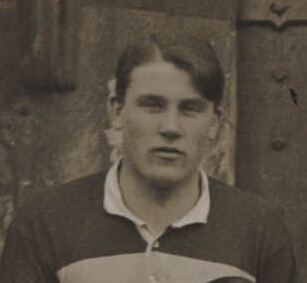
- Age: 24
- From: Minchinhampton, Glos
- Regiment: The King's (Liverpool Regiment) 18th Btn
- K.I.A Monday 29th April 1918
- Commemorated at: Tyne Cot Memorial
Panel Ref: Panel 31-34
Robert William was born in 1894, the son of Joseph and Caroline Sophia Sparks (nee Philpotts) who married June 1881 in Stroud.
The 1911 census shows the family living at Park Terrace, Minchinhampton, Gloucester.
He was commissioned into the 18th Bn of the Kings Liverpool Regiment having been Serjeant 528455 in the Rifle Brigade.
The Sparks family lived at 11 Park Terrace for several generations. Robert was the youngest child of Joseph and Caroline (nee Philpotts) and had three older brothers and three older sisters living at the time of the 1911 Census; another brother, Ernest had died in 1883 at the age of just three weeks.
At the outbreak of the Great War Benjamin Sparks was one of the recruits photographed outside the Crown Inn after enlisting in the 8th Battalion Gloucestershire Regiment, aged 22. The eldest son, Henry, was a carpenter, married with a young daughter and living at Lemon Villa, Friday Street. At that stage of hostilities married men were not encouraged to enlist, and it was not until 1917, aged 35, that he entered the newly-formed Royal Air Force, where his skills were much in demand with the wooden and fabric machines of that time. The third brother, John, had left for Sydney, Australia in 1911, although there is no record of him enlisting, either there or back in England.
Robert grew up in Minchinhampton, in a family closely linked to Holy Trinity Church. He was both baptised and confirmed there and became a member of the choir. He and his sister Lucy, whom older residents will remember living in Park Terrace, joined the “Band of Hope”, a temperance group where they regularly raised money by performing in plays and pantomimes. He was also recognised as an excellent scholar at the local school, playing a major role in the Empire Day celebrations of 23rd May 1906, when he recited Tennyson’s poem “The Charge of the Light Brigade” in the Market Square. In 1907 he was awarded a Foundation Scholarship, tenable for three years, to Marling School. By 1911 he was working as a chemist’s assistant.
Robert William Sparks came from Lewis Lane School in Cirencester to become a member of the 1914 – 1916 year group in Cheltenham. His college nickname was “Squibs” and he was a member of the rugby team
According to his obituary, Robert was at a Training College for Elementary School Teachers when war broke out in 1914 and he completed his training before enlisting in 1915.
Cheltenham Chronicle 10th July 1915
THIS WEEK'S CHELTENHAM RECRUITS
The following have been passed by the Cheltenham Recruiting Officer (Lieut. Agg) during the week ending July 9:- Robert W. Sparks;
Family stories place him with the 11th Battalion Gloucestershire Regiment, but he rose rapidly through the ranks and was commissioned as a Second Lieutenant in 1917 with 18th Battalion, The Kings Liverpool Regiment. Following heavy casualties new officers were drafted in from other regiments, hence Robert’s commission. At the end of 1917 his new regiment was stationed in the very north of France but by Spring of the following year they were in action in Flanders, to the south of Ypres.
The Battalion War Diary does not mention him until 21st March 1918, the first day of the Spring Offensive and the breakthrough near St Quentin. On this day, he is listed as belonging to No.1 Company, under the command of Captain J S Edwards.
This Company was in the thick of the defensive fighting from 21st to 30th March, and Sparks obviously acquitted himself well, because he was rewarded with the Military Cross for the actions during that period, which was notified to the Battalion on 23rd April 1918, a week before his death in action. A booklet published after the war, and entitled ‘The Stroud and District and its Part in the Great War’, states that his Military Cross was ‘Awarded for most gallant behaviour during the Somme Battles, during which he and his Captain were the only two officers of the Company surviving. ‘
From 9th April 1918 the Battles of the Lys was fought to counter the German offensive “Operation Georgette” which had the objective of capturing key railway and supply roads and cutting off British Second Army at Ypres. After initial successes the German attack was stopped, after British and French reserves were deployed. It was during the early stages of this campaign that the Military Cross was awarded to Robert:
Liverpool Daily Post 5th August 1918
LANCASHIRE AND CHESHIRE OFFICERS
The recently issued list of awards of the Military Cross contains the names of the following:-
“For conspicuous gallantry and devotion during a withdrawal through a town, when by his coolness and total disregard of personal safety he was largely responsible for the admirable order in which the men fell back. Although surrounded by the enemy he continued to resist with a handful of men, only leaving the town when the enemy had obtained full possession of it. Several times he was called on to surrender, but never gave up the fight”.
He wrote home to Minchinhampton of the honour, but a few days later, on the last day of the battle on 29th April, he was killed, although his body was not recovered. Robert has no known grave and is commemorated at the Tyne Cot Memorial in Belgium.
Those United Kingdom and New Zealand servicemen who died after August 16th 1917 are named on the Tyne Cot Memorial, a site which marks the furthest point reached by Commonwealth forces in Belgium until nearly the end of the war.
The Tyne Cot Memorial now bears the names of almost 35,000 officers and men whose graves are not known. The memorial, designed by Sir Herbert Baker with sculpture by Joseph Armitage and F.V. Blundstone, was unveiled by Sir Gilbert Dyett on 20 June 1927.
The memorial forms the north-eastern boundary of Tyne Cot Cemetery, which was established around a captured German blockhouse or pill-box used as an advanced dressing station.
On the day of his death 29th April 1918, the Battalion was serving on the Ypres Salient and was in the front line at Elzenwalle, near Ridge Wood, awaiting a renewal of the German assault on that front.
At 02.30 am the attack began with a devastating bombardment along the whole battle front, from the forward positions back to a depth of over a mile. At 6am the enemy Infantry attacked, the main force of the assault being directed at a position near Ridge Wood, where one of the Battalion’s forward listening posts was captured and held. Then, 16999 Company Sergeant Major G Sutton of No.1 Company gallantly drove out the attackers with Mills Bombs, an action for which he was later awarded the Distinguished Conduct Medal. After a strong defence along the Battalion frontage, the Germans withdrew.
They continued their artillery barrage throughout the rest of the morning and afternoon, however, and at about 17.00 began to mass once more for another Infantry attack. This was contained by Rifle and Lewis Gun fire, until a large British Artillery barrage at 18.00 finally broke up all enemy activity.
One of the senior officers wrote to his parents expressing “in the warmest terms of their son’s gallantry and popularity with all ranks. Your son was one of the bravest fellows we ever had in the Battalion”
The award of Robert's Military Cross was formally announced in a Supplement to the London Gazette LG:30813/26 Jul 1918.
Robert is remembered on the Minchinhampton World War 1 Roll of Honour.
We currently have no further information on Robert William Sparks, If you have or know someone who may be able to add to the history of this soldier, please contact us.
Killed On This Day.
(108 Years this day)Sunday 16th June 1918.
Pte 57615 Fred William Preddy
23 years old
(105 Years this day)
Thursday 16th June 1921.
Captain Leonard George Duncan
43 years old