
1885 - 1916

CPL David Wallace Crawford
1887 - 1916

Lce-Corpl John Joseph Nickle
1894 - 1916

Pte 17911 Morton Neill
1897 - 1916

Lieut Edward Stanley Ashcroft
1883 - 1918

Capt Charles Norman Brockbank
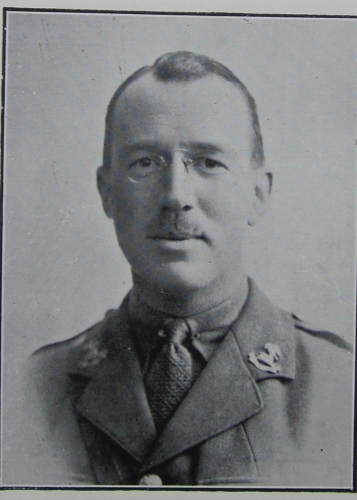
- Age: 31
- From: Blundellsands, Liverpool
- Regiment: The King's (Liverpool Regiment) 18th Btn
- K.I.A Saturday 1st July 1916
- Commemorated at: Danzig Alley Cem, Mametz
Panel Ref: V.U.8
Captain Charles Norman BROCKBANK, 18th Battalion, KLR.
Charles Norman was born in Blundellsands near Liverpool on 14th September 1884 the only child of Robert Henry Brockbank and his wife Marion Annie (nee Johnson) who were married in Leicester in 1883. Marion was born in Ulverscroft, Leicester.
On the 1891 Census, although his parents were living on Freshfield Road, Formby, Charles Norman aged 6 was a visitor at 69 Forest Road, Loughborough with the Toone family. His father’s youngest brother Percy married into the Toone family.
Charles was educated at Merchant Taylors School, Crosby from 1894 -1898, and Malvern College, Oxford 1899-1901.
The 1901 Census finds the family living at 3 Mersey Road, Great Crosby.
His father, Robert Henry is aged 51, a general broker, and his mother, Marion, is aged 43, also declared are a maid and a cook. Charles Norman is now 16 and a pupil at Malvern College.
After finishing University, Charles appears on the passenger list of the White Star Liner “Lake Magentic” departing for Montreal, Canada on the 06th August 1901.
Charles appears on the passenger list of the Cunarder “SS Ivernia” into Liverpool on the 28th December 1905 from Boston.
On the 27th March 1906 he joined Blundellsands Masonic Lodge.
To help his study of foreign languages, he subsequently travelled on the Continent, to Canada and the United States of America. After a two year period back in England, he took up an appointment in Karachi, India, for Messrs Forbes, Forbes Campbell and Co, a London firm of East India Merchants. He returned to England after five years, to become a partner in his father’s firm, Messrs William Porter and Co, West African produce brokers. Although not a athlete, he enjoyed rowing, riding and music.
By the time of the 1911 Census the family are living at "Ulverscroft", (mother’s place of birth), Mersey Road, Blundellsands.
Father Robert Henry is aged 61, an African produce broker, mother Marion is aged 52(married with 1 child). They have two servants, Charlotte Jones 21 is the cook, and Enid Davies 18 is the housemaid. Charles Norman 26 (crossed out) is described as "away - working in a merchants office in India".
On 01/09/1914 he enlisted in Liverpool as Private No 15039 in the 17th Battalion Kings (Liverpool) Regiment giving his occupation as a General Produce Broker. He had already applied for a commission and was one of the first men from the ranks to be commissioned his name appearing in the London Gazette on 02/09/1914 the day after he enlisted.
Charles was in charge of No 1 Company when the Battalion left for France in November 1915 and was gazetted Captain in March 1916.
The Battalion War Diary shows he was wounded by a rifle grenade on 11/01/1916.
On 1st July 1916, the day he was killed, he led No.1 Company into action. The Battalion’s objectives that day, was the capture of the German front and support trenches, and the German fortified position know as the Glatz Redoubt. The German front line trenches fell according to plan, but as the Battalion tried to leave the German support line, its advance was held up by enfilading fire from a machine-gun firing from Alt Trench, on the left flank. Captain Brockbank was hit twice by this machine-gun and refusing to seek shelter in a shell hole, he asked to remain in the open, so that he might continue to cheer on his men. He was heard shouting "go on, number one" - a memory that stayed with the men of his company. There he died aged thirty two.
His death was reported in the Liverpool Daily Post 18th July 1916:
THE “PALS” PART IN THE ADVANCE.
HOW CAPTAIN BROCKBANK DIED.
“ GO ON, NUMBER ONE! ”
LIEUTENANT WHO SHOT SIX GERMANS.
The splendid part which the Liverpool and Manchester “Pals” played in the launching of the great offensive on Saturday, July 1st, has been related to a representative of the “ Post ” by a number of local men who were wounded Their stories, arranged in proper sequence, enable the public to follow the doing's of these local regiments from the time they clambered over their trench parapets to the taking of the system of communication trenches just outside the village of Montauban, which was the set objective of the “Pals” in this first charge forward.
It also featured in the Liverpool Echo 18th July 1916:
CAPTAIN BROCKBANK'S DEATH.
The beginning of the advance is described by Private Thomas Pringle, of the Liverpool Regiment (No. 1 Company), and who resides at Gerald-street, Liverpool:-- " The job of No.1 Company was to go right through to the Germans' fourth trench- Just as we were half-way to the first trench Captain Brockbank, in charge of No. 1 Company, was hit from a machine-gun concealed somewhere to our left—l fancy it must have been the one which gave us such trouble from the corner of Mametz Wood—but he kept on marching and encouraging us with cries of ‘Go on, No. 1.’ We encountered no opposition at the first trench. Our artillery had peppered far too well, and we saw German bodies lying all along. So we went right through to the second trench. Here Capt. Brockbank was shot again, and fell into a shellhole, where, I believe, died. But Lieutenant Fitzbrown took command, and he encouraged us similarly with cries of ‘Go on, No. 1’- there is any amount of rivalry, you know, between the different companies, and it proves a fine incentive in attack.”
“When we reached the second trench I saw Lieutenant Fitzbrown kneel on the top of the parapet and shoot three Prussian Guards and three Bavarians. It was at this point I was shot and was unable to follow the company.”
This story that the Germans were completely surprised at the attack was confirmed by a corporal of the same company, who, in conversation with one of the prisoners, learned that the German officers had told the men that the British would attack at four o'clock, as this was the time the dawn began to break, and when attacks were usually made. When there was no attack 4 a.m., they were then told that they could lie down and have a rest, as the British would not now come out until four o'clock in the afternoon, and that if they should not come then the Germans were going to make an attack. The result was that some of the Germans were actually caught in their dugouts, where they had been asleep. [Sadly Lieutenant Eric Fitzbrown was to fall later that day.]
FIGHTING AT FIFTY NINE.
Some other facts about the work of the Liverpool companies were gained from Private Francis Woods, 4th Company, Liverpools, a young man whose home is 36, Warren-drive, New Brighton.
"Our work,'' he said, “was to follow up the other companies and to clear up the trenches. We bombed and searched dugouts, cleared the trenches of prisoners and dead, and held on. The prisoners seemed rather pleased than otherwise to fall into our hands, for eight days during the bombardment they said they had hardly any food to eat.”
Liverpool Daily Post 20th July 1916
Brockbank - Captain Charles Norman Brockbank.
Memorial service will be held in the St Nicholas's Church, Blundellsands, tomorrow (Friday) at 12:30 p.m.
The Liverpool Daily Post of 22nd July 1916 contained a report on the Memorial Service:
THE LATE CAPTAIN C. N. BROCKBANK.
MEMORIAL SERVICE.
There was a large gathering at the service which was held at Saint Nicholas's Church Blundellsands yesterday, in memory of the late Captain Charles Norman Brockbank of the King's Liverpool Regiment. The Rev. A. Hartley officiated and he was assisted by the Rev. Dr G. A. Guest and the Rev. S. E. Dymmot, Vicar of Glazebury. Dr A. W. Wilcock presided at the organ. At the conclusion of the service the buglers of The King's Liverpool Regiment sounded the “Last Post.”
In the course of his address the Rev. E. Hartley said that Captain Brockbank's fine character took him into the business world of Liverpool, where he was brought into contact with men of the world, whose fine appreciation- coming as it did from men accustomed to dealing with the hard facts of life- were extraordinary. When he answered the call of his country, they knew that he would carry out his duty in the same manner as he had done in business life, and they were not surprised to learn that he died at the head of his company, leading his men in a successful and glorious charge right to the very redoubt he was sent to capture. His colonel, who died several days later, sent a letter breathing the same regard and appreciation of his high qualities, as his other friends had shown. When the war was over would we show ourselves worthy of the sacrifices that had been made, or were they to let the world go back again as it were before? Were they to stand idly by and see wrongs done that we're done before? Were they to let the politics drift back in the same party scheming? Were they to let social evils, which had been so bad, still go on? Were they to go on flaunting their wealth in vulgar display, or were they to apply it to its proper use?
These are questions they must answer.
Liverpool Echo 02nd July 1917
Lost At The Somme Battle:
To the Glorious Memory of Lieut.-Colonel E. H. Trotter, D.S.O., Captain A. de Bels Adam, Captain C. N. Brockbank, Lieut. G. M. Dawsin, Lieut. B. Withy, Sec.-Lieut. N. A. Barnard, Sec.-Lieut. L. R. Davies, Sec.-Lieut. E. Fitzbrown, Sec.-Lieut. D. M. Griffin, Sec.-Lieut. G. B. Golds, Sec.-Lieut. G. A. Herdman, Sec.-Lieut. R. V. Merry, Sec.-Lieut. R. H. Tomlinson, Sec.-Lieut. T. R. Walker, and the non-commissioned officers and men the 18th (Serv.) Battalion “The King's” (Liverpool Regiment), who fell in the battle of the Somme, July, 1916.
In a interview given in 1984, former 16400 Private S R Steel described finding Brockbank’s body about half an hour after the attack had started. He said that Brockbank had been hit twice, and he had been told that after his first wound, he got up and went forward again, whereupon he was hit in the throat, which wound proved fatal.
Captain Brockbank now rests in Danzig Alley Cemetery, at Mametz, about a mile from where he was killed, in Plot V, Row U, Grave 8. His original grave marker was a wooden pointed cross with a circle joining the arms and inscribed
R. I. P. IN LOVING AND PROUD MEMORY OF CAPT. C. NORMAN. BROCKBANK 18TH KINGS LIVERPOOL. KILLED 1. 7. 1916.
Today is CWGC headstone bears the private Inscription:
"THAT LIFE IS LONG THAT ANSWERS LIFE'S GREAT END" DUTY & LOVE REST IN GOD."
The village of Mametz was carried by the 7th Division on 1 July 1916, the first day of the Battle of the Somme, after very hard fighting at Dantzig Alley (a German trench) and other points. The cemetery was begun later in the same month and was used by field ambulances and fighting units until the following November. The ground was lost during the great German advance in March 1918 but regained in August, and a few graves were added to the cemetery in August and September 1918. At the Armistice, the cemetery consisted of 183 graves, now in Plot I, but it was then very greatly increased by graves (almost all of 1916) brought in from the battlefields north and east of Mametz and from certain smaller burial grounds.
Dantzig Alley British Cemetery now contains 2,053 burials and commemorations of the First World War. 518 of the burials are unidentified but there are special memorials to 17 casualties known or believed to be buried among them. Other special memorials record the names of 71 casualties buried in other cemeteries, whose graves were destroyed by shell fire.
The cemetery was designed by Sir Herbert Baker.
In a letter sent to his parents after his death, it was said that he was "a favourite with all the ranks and his men were devotedly attached to a very capable Officer. “
An extract from the Malvernian July 1916:
'Norman Brockbank was a thoroughly good boy at school; steady, trustworthy, loyal. All his subsequent career has borne out the hopes of his friends, and his ready answer to his country's call was of a piece with his previous record.—S.R.J. After leaving school, he spent five years in business in India, returning afterwards to Liverpool, where he became a partner in the firm of W. Porter and Co., African produce merchants. At the outbreak of the war he trained with the 2nd City Battalion of the Liverpool Regiment.'
On 21st July 1916, a memorial service was held for him in the Church of St Nicholas, Blundellsands, where he worshipped and at this service it was said of him:
“He died at the head of his Company leading his men in a successful and glorious charge, right to the very redoubt he was sent to capture “. In May 1918 Canon Armour DD, who was once headmaster of Merchant Taylors School and knew Brockbank well, unveiled a tablet to his memory in the same church. At the time Cannon Armour described his life, “it was a manly life, a truly Christian life,“ and said of him that he was "always in heart and deed and profession a consistent Christian, and surely that means he was a perfect gentleman."
The tablet is of green and white marble, with carvings outlined in gold leaf. At its top, underneath the sign of the cross, is a gold representation of the Eagle and Child cap badge, surrounded by ribbons, which fall over a British Army officer’s sword and scabbard. Below this, is on the main portion of the tablet, is the inscription : "Giving thanks to GOD for the loving and beautiful life of CHARLES NORMAN BROCKBANK aged thirty two years. Captain 18th Battalion King’s Liverpool Regiment. He fell at the head of his beloved Company in the hour of Victory, in the great advance on the Somme, France, July 1st 1916. Though thrice wounded he lay in the open and cheered his men on until he fell asleep.“ The soul our life’s star hath elsewhere had its settings.“
Probate was granted on 30th January 1917 in Liverpool:-
BROCKBANK Charles Norman of Ulverscroft, Blundellsands Road, East Blundellsands Lancashire temporary captain 18th K.L.R. died 1 July 1916 in France Administration Liverpool 30 January to Robert Henry Brockbank produce broker. Effects £1142 16s 5d.
Soldiers Effects to father Robert H., no Pension record found.
Charles was mentioned in the Liverpool Echo on the 02nd July 1917:
Lost At The Somme Battle:
To the Glorious Memory of Lieut.-Colonel E. H. Trotter, D.S.O., Captain A. de Bels Adam, Captain C. N. Brockbank, Lieut. G. M. Dawson, Lieut. B. Withy, Sec.-Lieut. N. A. Barnard, Sec.-Lieut. L. R. Davies, Sec.-Lieut. E. Fitzbrown, Sec.-Lieut. D. M. Griffin, Sec.-Lieut. G. B. Golds, Sec.-Lieut. G. A. Herdman, Sec.-Lieut. R. V. Merry, Sec.-Lieut. R. H. Tomlinson, Sec.-Lieut. T. R. Walker, and the non-commissioned officers and men the 18th (Serv.) Battalion “The King's” (Liverpool Regiment), who fell in the battle of the Somme, July, 1916.
Charles Norman is also commemorated on the following Memorials:
Hall of Remembrance, Liverpool Town Hall, Panel 15 Left
Northern Cricket Club, Elm Avenue, Moor Park, Great Crosby,
Merchant Taylor’s School for Boys Memorial, Liverpool Road, Crosby.
Liverpool Exchange Newsroom Memorial on Exchange Flags
St Nicholas Church, Blundellsands
His father died, aged 73, on the 15th June 1923 in Teignmouth, Devon.
Probate 1923:-
BROCKBANK Robert Henry of Ulverscroft 19 Adelaide Terrace, Waterloo Lancashire retired broker died 15 June 1923 at Teignmouth, Devonshire Probate Liverpool 15 October to Charles William Toone and Charles Edward Amphlet gentleman. Effects £14,723 6s 5d(over £1m today).
His mother died, aged 78, on the 13th April 1936 in Teignmouth, Devon.
Probate 1936:-
BROCKBANK Marion Annie of 1 Alberta Mansions, Teignmouth, Devonshire widow died 13 April 1936 Probate Leicester 27 June to Frank Henry Toone and Charles Edward Amphlet solicitors. Effects £23,813 2s 10d(over £2m today).
We currently have no further information on Charles Norman Brockbank, if you have or know someone who may be able to add to the history of this soldier, please contact us.
Killed On This Day.
(108 Years this day)Friday 10th May 1918.
Pte 203014 Charles Edward Barker
21 years old
(108 Years this day)
Friday 10th May 1918.
Pte 36708 Charles Robert Leigh
26 years old
(108 Years this day)
Friday 10th May 1918.
Lieut John Alexander Threlfall
37 years old
(108 Years this day)
Friday 10th May 1918.
L/Cpl 49029 Robert Whittam
28 years old