
1885 - 1916

CPL David Wallace Crawford
1887 - 1916

Lce-Corpl John Joseph Nickle
1894 - 1916

Pte 17911 Morton Neill
1897 - 1916

Lieut Edward Stanley Ashcroft
1883 - 1918

2nd Lieut John Edmund Percival Cockey
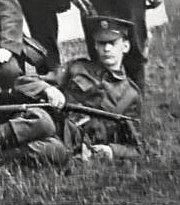
- Age: 23
- From: Little Waltham, Essex
- Regiment: The King's (Liverpool Regiment) 20th Btn
- K.I.A Sunday 30th July 1916
- Commemorated at: Thiepval Memorial
Panel Ref: P&F1D8B &8 C.
John Edmund Percival Cockey was born on 12th June 1893 at Little Waltham, Essex, just north of Chelmsford, the youngest son of Edmund Percival Cockey M.D and his wife Ellen Hortense (nee Gillott, found as Jillett on another record). Edmund and Ellen married in Folkestone, Kent, on the 12th November 1888 and had four children. John had elder siblings Elaine Joanna (or Jeannie) Marianne and Ralph Percival, both born in the Chelmsford area, and a younger brother Vivian Percival, born in London and who died in infancy, the family living at the time at 97 Ladbroke Grove in Kensington.
John was baptised on 16th July 1893 at Little Waltham. The baptismal records show the family address as The Limes, Little Waltham.
The 1901 Census shows the family have moved to West Lodge, Christchurch Street West, Frome, Somerset.
His father Edmund is a medical practitioner born in Frome in 1861, whilst his mother is shown as born in 1868 in Boulogne, France (census shows B.S., British Subject). John is listed as Jack aged 7 and he has an elder sister Elaine aged 11 who was also born in Little Waltham. There is also a servant listed. His brother Ralph, 9, is a visitor in the Vicarage home of John Polehampton, a clergyman, and his family in Frome.
He was educated at King's School, Worcester. He entered the school in May, 1906, won a K.S. (King's Scholarship) in 1907, and left the Lower Sixth in 1910.
He then worked for the Union of London Bank & Smith’s Bank in Regent Street, London. He was a member of the bank's staff sports club.
Passenger lists in December 1910 show his father travelling unaccompanied to Fremantle, Australia, where he settled and practiced medicine in the town of Goomalling, Western Australia. That same month son Ralph emigrated to Canada. He was 19, an engineer, his destination British Columbia. The 1911 census finds him working on a farm in Cariboo, north of Vancouver.
In 1911 his mother Ellen and sister Elaine followed Ralph to Canada.
Although his father had emigrated to Australia, and his mother and siblings to Canada, John decided to remain in the U.K. The 1911 Census finds 17 year old John living at Hampden House, Phoenix Street, London. He is a Bank Clerk.
John enlisted on 04th November 1912 as Rifleman 9440 joining O Coy. of the 1/5th Battalion of the London Rifle Brigade. His address was then Tavistock Square, London.
John reached France aboard the S.S. Chyebassa. He landed at La Havre on 05th November 1914.
In February 1915 he was wounded and returned to England on 11th February 1915. He spent time convalescing at Oxford and Henley-on-Thames. In July 1915 he was attached to the OTC at Whitchurch. He was gazetted on 10th August 1915 to the 15th Battalion of The King’s Liverpool Regiment. In June 1916 he left for France where he joined as 2nd Lieutenant in the 20th Battalion of The King's Liverpool Regiment.
The Battalion diary has an entry for the 02nd July 1916 which records the arrival of Second Lieutenant S. E. Cockey, and it is highly probable that this is the same Officer. At this time the Battalion was in former German trenches at Montauban, captured the day before during the successful advances of the 01st July 1916 the opening day of the Battle of the Somme.
Second-Lieutenant J E P Cockey was killed in action during the Battle of Guillemont on 30th July 1916.
The Battalions objectives on that day were German trenches on the South Eastern edge of Guillemont, which was a heavily fortified village on top of a gentle slope, with a front of about seven hundred yards. Each end of the front was also defended by Machine-guns, which could give covering and enfilading fire. The line of attack was entirely without cover. The 20th Battalion was on the right flank of the British line, next to the French 153e Regiment d’infanterie and this necessitated an advance of more than a mile before the main enemy positions were reached.
The attack began at 04.45am in a thick mist, which only gave ten yards visibility. Despite this the initial assault went quite well and Maltz Horn Farm fell fairly early in a joint attack between the 2nd Battalion The Bedfordshire, of the 89th Brigade and the French Infantry. However the continuing mist and a barrage of high explosive and gas shells made it extremely difficult for the attacking waves moving forward to keep together, and when the mist began to lift at about 6am most of the waves had lost touch.
However the Battalion continued to move forward against the Maltz Horn Trench System and took the first one killing nearly all its occupants. As it moved into the open however, to take the German second line, it had to proceed down an exposed slope, which was overlooked by the enemy who were in a perfect enfilading position. The attackers were easily seen by the Germans who, firing from the left flank, opened up on them with withering machine gun fire. Most of the Battalion’s Casualties on the day were probably sustained at this time. It also meant that many men were pinned down and could not move in any direction until darkness fell. One party of two hundred and fifty men reached the Guillemont to Hardencourt Road, where they had to stay until nightfall, without support until they could withdraw.
Some of the Headquarters Company however, were able to occupy and consolidate a Trench to the north of the Maltz Horn Farm until ‘C ‘ Company of the Bedfords was able to join it up with Arrow Head Copse, which was south west of Guillemont itself. This allowed the Maltz Horn Ridge to be held until the Battalion was finally relieved in the early hours of 31st July. By this time however, the Casualties sustained were nine officers and one hundred and thirty seven other ranks Killed, wounded or missing and many more wounded.
Second Lieutenant Cockey was amongst those reported missing and as his body was never found and identified after the war he was presumed killed on that day. He was aged 23.
The events of 30th July 1916 were regarded at the time as Liverpool’s blackest day. There follows an extract from The History of the 89th Brigade written by Brigadier General Ferdinand Stanley which gives an indication of the events of the day.
30th July 1916
The 20th King’s Battalion Diary records:
“At 4.45am prompt the attack was launched. Unfortunately, a thick mist prevailed and it was impossible to see more than 10 yards ahead. This continued until about 6 o’clock when it lifted slightly, but it was still too hazy and impossible to see what was happening 100 yards ahead. This being so, it was not surprising to find that the attacking waves were experiencing great difficulty in maintaining connection.”
At 6am, Lt. RE Melly, No.1 Company, reported that his men had taken the German Maltz Horn trench.
At 6.30am, 2/Lt. CP Moore reported that he had 150 men, 4 Stokes Mortars and 2 Lewis Guns, but he was the only officer. He also said that due to the fog, both his “flanks were in the air” i.e. he was not in contact with neighbouring troops.
At 9.10am, Moore was still not in contact at his flanks, and now he had only 75 men, he had sent out 2 patrols and neither not returned. Later Moore established communication with the French on his right.
Around 10.00am, 2/Lt Musker reported that he had just over a company with him, but his left flank was suffering from German machine gun fire. Later he reported that he had over 30 casualties from the machine gun fire. His flanks were also “in the air”. No contact was made with this party until the remnants returned around 9.30pm, all runners sent were killed or missing. The War Diary states that this group had: ”held the ground won all day, and this permitted the consolidation of the ground won on the Maltz Horn ridge with little interference from the enemy”.
Relief for 20/Kings had been planned for 11.00pm, but it was 5.00am on the 31st July before it took place, ending a tragic day for the Liverpool Pals.
Casualties for 20th Battalion were 16 Officers and 357 Other Ranks
When darkness fell on the battlefield the 30th Division held a line from the railway on the eastern side of Trones Wood , southwards and including Arrow Head Copse, to east of Maltz Horn Farm. On this line the division was relieved by the 55th Division during the early hours of the 31st July.
The events of 30th July 1916 were regarded at the time as Liverpool’s blackest day. There follows an extract from The History of the 89th Brigade written by Brigadier General Ferdinand Stanley which gives an indication of the events of the day.
Guillemont
Well the hour to advance came, and of all bad luck in the world it was a thick fog; so thick that you couldn’t see more than about ten yards. It was next to impossible to delay the attack – it was much too big an operation- so forward they had to go. It will give some idea when I say that on one flank we had to go 1,750 yards over big rolling country. Everyone knows what it is like to cross enclosed country which you know really well in a fog and how easy it is to lose your way. Therefore, imagine these rolling hills, with no landmarks and absolutely unknown to anyone. Is it surprising that people lost their way and lost touch with those next to them? As a matter of fact, it was wonderful the way in which many men found their way right to the place we wanted to get to. But as a connected attack it was impossible.
The fog was intense it was practically impossible to keep direction and parties got split up. Owing to the heavy shelling all the Bosches had left their main trenches and were lying out in the open with snipers and machine guns in shell holes, so of course our fellows were the most easy prey.
It is so awfully sad now going about and finding so many splendid fellows gone.
John's body was not recovered or was subsequently lost as he is commemorated on the Theipval Memorial in France.
The Thiepval Memorial, the Memorial to the Missing of the Somme, bears the names of more than 72,000 officers and men of the United Kingdom and South African forces who died in the Somme sector before 20 March 1918 and have no known grave. Over 90% of those commemorated died between July and November 1916.
On 01st August 1932 the Prince of Wales and the President of France inaugurated the Thiepval Memorial in Picardy. The inscription reads: “Here are recorded the names of officers and men of the British Armies who fell on the Somme battlefields between July 1915 and March 1918 but to whom the fortune of war denied the known and honoured burial given to their comrades in death.”
The following report appeared in Berrow’s Worcester Journal, Saturday 26th August 1916:
SEC_LIEUT. J.E.P. COCKEY
Second-Lieut. John E. P. Cockey, Liverpool Regt., recently reported missing, and now known to have been killed, was the only son of Dr. E. Cockey, of Frome, Somerset. He was educated at the King’s School, Worcester, where he was a King’s Scholar. He gave up a business position in London last year to take a commission, and he had quite recently gone to the front.
A Memorial Service for The Men of Worcester and the Neighbourhood who have laid down their lives in the war was held in Worcester Cathedral on All Saints Day, 1916 at 7.30pm. 2nd Lieut. J.E.P. Cockey, King’s Liverpools is listed on the Roll of Honour in the service booklet under Old Vigornians.
His death was reported in Australia in the Northam Courier on 16th August 1916:
"Great regret was felt when the news became known on Saturday that a cable message had been received by Dr. Cockey, to the effect that his eldest [sic] son has been killed in action in France, and another wounded and in hospital. The son who has fallen, was previous to joining the forces two years with the Territorials, and was one of the first to offer his service for his country. After a few months at the front he was wounded and invalided home, and it was somewhat of a coincidence that he would have been nursed by a Northam nurse (Nurse Dunne). The sympathy of the whole community is extended to Dr. and Mrs. Cockey in their sad bereavement.``
Bristol Times and Mirror - Saturday 09 September 1916
SEC-LIEUT J. E. P. COCKEY.
Sec-Lieut John E. P. Cockey (Liverpool Regiment), recently reported missing, now known to have been killed, was the youngest son of Dr E. Cockey, formerly of Frome, Somerset. He was educated at King’s School, Worcester, where he was a King’s scholar. He left the Union of London and Smith’s Bank (Regent Street Branch) where he was a clerk from 1911 to 1914 at the outbreak war, and as a private in the Rifle Brigade went to France in November, 1914. He twice suffered injury in the trenches, and in February 1915 he obtained a commission in the Liverpool Regiment, and went out to the front last June.
John's death was also announced in The Lancet, as a son of a medical man.
John earned his three medals: the 1914 Star, British War Medal, and Victory Medal. They were sent to his mother c/o Westminster solicitors Kirby, Millett & Aynscough.
Probate was granted on 01st March 1917 as follows:
John Edmund Percival Cockey of Hampden House, Phoenix Street, Middlesex, second lieutenant 20th battalion Liverpool Regiment died 30 July 1916 in France killed in action. Administration (limited) London 1 March to Alfred Octavius Kirby solicitor the attorney of Edmund Percival Cockey. Effects £360 12 s. 11d.
John Edmund Percival Cockey is also remembered on the following Memorials
Christ Church, Frome, Somerset
Kings School, College Green, Worcester
National Provincial And Union Bank Of England WW1, City of London, Greater London
National Westminster Bank, City of London office
Institute of Bankers Roll of Honour (gives date of death 12th August 1916)
King's School Cloister Window, Worcester Cathedral
Union of London & Smith's Bank, Princes Street, City of London
By the 1916 provincial census, Ellen, Ralph, and Elaine are listed under the surname Jameson in a small community near Lougheed, in the province of Alberta. Ralph, 21, is a soldier, his mother Ellen is 46 (listed as a widow), her occupation farmer, and sister Elaine is 23.
His father ("the popular Goomalling medico") died in Western Australia on the 29th March 1917 when his car collided with a train at a railway crossing. He was 56 years old, the newspaper reporting that "his wife and family are resident in England" and “. Probate was granted to another doctor, Matthew Mitchell Bird in England.
Northam Courier, Friday 6 April 1917
The funeral of the late Dr Cockey of Goomalling took place at Northam on Saturday afternoon last and was largely attended. The Rev. J. Mason conducted the burial service and the remains were interred in the Anglican Cemetery.
When his brother, Ralph, attested (as Jameson) in September 1915 ("former name Cockey"), he stated previous service of three years with the British Columbia Horse. He gave his occupation as farmer and as next of kin his mother Ellen Jameson of Lougheed, Alberta, separated from her husband of a different name. He sailed on 19/04/1916 for Liverpool as Private 437768 with the 21st Overseas Bn. of the Canadian Expeditionary Force, and landed in France on 09/06/1916. Six weeks later, at Zillebeke, on 21/07/16, ten days before John's death, he suffered a gunshot wound to the left hand. He was evacuated to the U.K. and spent months undergoing treatment before being discharged from hospital in February 1917. He was repatriated to Canada in June 1917 and discharged that August.
It is not known when his mother died. His siblings died in British Columbia, Ralph in 1965 and Elaine in 1976, both buried as Jameson.
Grateful thanks are extended to John Frank an expert on the London Rifle Brigade for the photoraph of John now shown on the website.
We currently have no further information on John Edmund Percival Cockey, If you have or know someone who may be able to add to the history of this soldier, please contact us.
Killed On This Day.
(110 Years this day)Tuesday 24th October 1916.
Pte 33220 David Brocken
24 years old
(109 Years this day)
Wednesday 24th October 1917.
Pte 17690 Henry Phipps
22 years old
(109 Years this day)
Wednesday 24th October 1917.
Pte 308326 James Speakman
26 years old
(108 Years this day)
Thursday 24th October 1918.
Serjeant 17245 Robert George Evans (MM)
22 years old