
1885 - 1916

CPL David Wallace Crawford
1887 - 1916

Lce-Corpl John Joseph Nickle
1894 - 1916

Pte 17911 Morton Neill
1897 - 1916

Lieut Edward Stanley Ashcroft
1883 - 1918

Pte 23849 George Alfred Turton
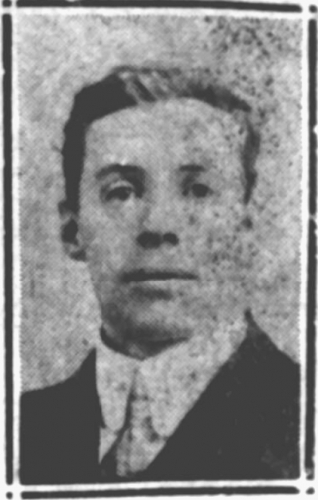
- Age: 35
- From: Widnes, Lancs
- Regiment: The King's (Liverpool Regiment) 20th Btn
- Died Saturday 30th December 1916
- Commemorated at: Widnes Cem Lancs
Panel Ref: VIII.U.NC.3059
George Alfred was born in Widnes in the fourth quarter of 1881 the son of Isaac Turton and his wife Elizabeth (nee Hartland). His parents married at St Mary's Church, Widnes on 22nd May 1867.
The 1891 Census finds the family living at an unspecified address in Oakland Street, Widnes. George is 9 years of age and shown as born in 1892. His father, Isaac, is a 44 year old bricklayer born in Warrington, whilst his mother, Elizabeth is also 44 years of age and was born in Stoke Heath (which is in Staffordshire; however, on previous censuses her place of birth is given as Stoke Prior, Worcestershire). George, aged 9, has two siblings living at home, both born in Widnes; Jane aged 14 and Harold H. aged 11. Also present is Jane Broderick, described as the neice of Isaac Turton. She is married and has her 3 month old daughter Isabella with her.
George's mother, Elizabeth died on 21st August 1899, aged 52.
The 1901 Census finds the family living at 94 Oakland Street, Widnes. George is now 19, and is a pupil teacher. He lives with his father and two siblings. Jane is now 24 and Harold H. aged 21 is a fitter and turner.
His father, Isaac died in January 1909, aged 61.
George was a member of the Victoria Road Wesleyan Church in Widnes where he was a Sunday school teacher in addition to being a member of the Church Choir. He also played for the Wesley Guild Football Team as well as being Secretary of the Social and Musical branch of the Wesley Guild. Prior to his enlistment he worked at the Britannic Insurance Company in Widnes where he was employed as an assistant superintendent.
The 1911 Census shows George Alfred living as a boarder at 67 Irwell Street ,Widnes, with his married sister Jane. The head of the household is Alfred Emery aged 33, born 1878 and occupation general fitter, his wife Jane is aged 34, born 1877, and they have two daughters Doris Elizabeth aged 7, born 1904 and Lilian aged 2, born 1909. George is aged 29, born 1882 and gives his occupation as a Life Assurance Agent.
His brother Harold, 31, is married and lives with his family in Regent Road, Widnes. He works as a turner in an iron foundry.
He enlisted in Liverpool joining the 20th Battalion of the King's Liverpool Regiment as Private 23849.
Formed in November 1914 the 20th Battalion were originally billeted at Tournament Hall, Knotty Ash before on 29th January 1915 they moved to the hutted accommodation purposely built at Lord Derby’s estate at Knowsley Hall. On 30th April 1915 the 20th Battalion alongside the other three Pals battalions left Liverpool via Prescot Station for further training at Belton Park, Grantham. They remained here until September 1915 when they reached Larkhill Camp on Salisbury Plain. He arrived in France on 7th November 1915.
George was on convalescent leave in England after receiving a gunshot wound to his right shoulder during the Somme offensive.
A report was printed in the Runcorn Weekly News on 18th August 1916:
“Private Turton Hit in Shoulder” -
“Private G. Alfred Turton, 20th Kings (Liverpool) Regiment, who lives with his sister, Mrs. A. Emery, at 67, Irwell Street, was severely wounded in France by a gunshot wound in the right shoulder on the 30th July. He is in the Armstrong College Hospital, Newcastle-on-Tyne, and is going on very well. Private Turton was a member of Victoria Road Wesleyan choir and of the Wesley Guild Tennis Club. He was one of the founders of the Widnes Wesley Guild Football Club, afterwards re-named Widnes County, and he assisted in the formation of several other clubs in Widnes, Runcorn, and Garston. He was formerly an active member of Simm’s Cross Institute. In business life Private Turton was assistant superintendent in Widnes of the Britannic Assurance Company. Enlisting soon after the outbreak of war, he went to France last November and has seen a lot of fighting since.”
Details of the day on which George was wounded were contained in the Battalion diary:
The 20th King’s Battalion Diary records:
“At 4.45am prompt the attack was launched. Unfortunately, a thick mist prevailed and it was impossible to see more than 10 yards ahead. This continued until about 6 o’clock when it lifted slightly, but it was still too hazy and impossible to see what was happening 100 yards ahead. This being so, it was not surprising to find that the attacking waves were experiencing great difficulty in maintaining connection.”
At 6am, Lt. RE Melly, No.1 Company, reported that his men had taken the German Maltz Horn trench.
At 6.30am, 2/Lt. CP Moore reported that he had 150 men, 4 Stokes Mortars and 2 Lewis Guns, but he was the only officer. He also said that due to the fog, both his “flanks were in the air” i.e. he was not in contact with neighbouring troops.
At 9.10am, Moore was still not in contact at his flanks, and now he had only 75 men, he had sent out 2 patrols and neither not returned. Later Moore established communication with the French on his right.
Around 10.00am, 2/Lt Musker reported that he had just over a company with him, but his left flank was suffering from German machine gun fire. Later he reported that he had over 30 casualties from the machine gun fire. His flanks were also “in the air”. No contact was made with this party until the remnants returned around 9.30pm, all runners sent were killed or missing. The War Diary states that this group had: ”held the ground won all day, and this permitted the consolidation of the ground won on the Maltz Horn ridge with little interference from the enemy”.
Relief for 20/Kings had been planned for 11.00pm, but it was 5.00am on the 31st July before it took place, ending a tragic day for the Liverpool Pals.
Casualties for 20th Battalion were 16 Officers and 357 Other Ranks
When darkness fell on the battlefield the 30th Division held a line from the railway on the eastern side of Trones Wood , southwards and including Arrow Head Copse, to east of Maltz Horn Farm. On this line the division was relieved by the 55th Division during the early hours of the 31st July.
The events of 30th July 1916 were regarded at the time as Liverpool’s blackest day. There follows an extract from The History of the 89th Brigade written by Brigadier General Ferdinand Stanley which gives an indication of the events of the day.
Guillemont
Well the hour to advance came, and of all bad luck in the world it was a thick fog; so thick that you couldn’t see more than about ten yards. It was next to impossible to delay the attack – it was much too big an operation- so forward they had to go. It will give some idea when I say that on one flank we had to go 1,750 yards over big rolling country. Everyone knows what it is like to cross enclosed country which you know really well in a fog and how easy it is to lose your way. Therefore, imagine these rolling hills, with no landmarks and absolutely unknown to anyone. Is it surprising that people lost their way and lost touch with those next to them? As a matter of fact, it was wonderful the way in which many men found their way right to the place we wanted to get to. But as a connected attack it was impossible.
The fog was intense it was practically impossible to keep direction and parties got split up. Owing to the heavy shelling all the Bosches had left their main trenches and were lying out in the open with snipers and machine guns in shell holes, so of course our fellows were the most easy prey.
It is so awfully sad now going about and finding so many splendid fellows gone.
He was expected to return to his battalion in France in the New Year of 1917. However, whilst in Darlington, he developed pleurisy which subsequently developed into pneumonia. He passed away in hospital in Darlington on the 30th December 1916, aged 35.
George was brought home to be buried in Widnes Cemetery. He is buried in the family plot alongside his mother and father. The family included the following inscription in recognition of his service:
"HIS DUTY NOBLY DONE"
There are 100 First World War burials in the Cemetery.
George's death was reported in the Runcorn Guardian on 05th January 1917:
ROLL OF HONOUR
Died In Hospital
George A. Turton
The death took place on December 30 at Darlington Hospital of Private George Alfred Turton, aged 35 years, younger son of the late Isaac and Elizabeth Turton, 67 Irwell Street, Widnes. He belonged to the Liverpool Regiment, and previous to joining the Army was an assistant superintendent of the Britannic Assurance Co. At one time he was a prominent member of the Widnes Wesley Guild FC.
George earned his three medals.
His outstanding Army pay and a War Gratuity of £9 went to his brother Harold. No pension card has been found, indicating that George had no dependants.
Probate was granted on 20th February 1917 to his brother Harold Hartland Turton.
George was commemorated on the 10th Anniversary of his death in the Runcorn Weekly News on 31st December 1926:
PRIVATE G. A. TURTON.
News of the death of Private George Alfred Turton of the 4th Liverpool "Pals" at Darlington was received ten years ago. After recovering from a wound in the right arm received in the battle of the Somme on July 30th, he intended visiting Widnes at Christmas on ten days leave, prior to reporting himself at the depot for further service. He was, however taken ill with pleurisy and his death caused through double pneumonia which followed. He was connected with Victoria Road Wesleyan Church for many years and on the formation of the Wesley Guild F.C. he was prominent in the team as centre-half. He played regularly in matches in the Free Church and Zingari Leagues and whilst captain he was the possessor of three cups in one season. Enlisting in November, 1914, he went into action a year later. In civil life Private Turton was assistant superintendent in Widnes of the Brittanic Assurance Co.
George is remembered on the Widnes Memorial, Victoria Park, Widnes.
Also on the family headstone as follows:
PTE GEORGE ALFRED TURTON KLR
SON OF THE ABOVE
DIED DECEMBER 30TH 1916 AGED 35 YEARS
HIS DUTY NOBLY DONE
We currently have no further information on George Alfred Turton, If you have or know someone who may be able to add to the history of this soldier, please contact us.
Killed On This Day.
(108 Years this day)Sunday 16th June 1918.
Pte 57615 Fred William Preddy
23 years old
(105 Years this day)
Thursday 16th June 1921.
Captain Leonard George Duncan
43 years old