
1885 - 1916

CPL David Wallace Crawford
1887 - 1916

Lce-Corpl John Joseph Nickle
1894 - 1916

Pte 17911 Morton Neill
1897 - 1916

Lieut Edward Stanley Ashcroft
1883 - 1918

Pte 52092 William John Walker
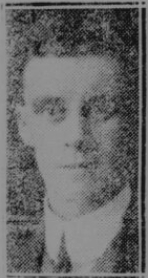
- Age: 29
- From: Devonport
- Regiment: The King's (Liverpool Regiment) 19th Btn
- K.I.A Thursday 12th October 1916
- Commemorated at: Serre Rd No.2 Cem, B-hamel
Panel Ref: XXXIII.J.9
His father, William, appears on the 1881 census at 22 Moon St, Stoke Damerel. He is a 27 year old RN seaman with his widowed mother Ann E. and 4 siblings.
A Royal Navy service record exists for a William Walker No.56583, born 21st April 1854 in Calne, Wiltshire.
Whilst serving on HMS Hotspur at Colesmith Creek in the Medway he was discharged with “? Melville” and died on the 8th Aug 1889 at the Royal Naval Hospital, Yarmouth, Norfolk. The burial took place on the 13th August, the record states he was a boatman Coast Guard.
William enlisted in Liverpool joining in the 19th Battalion, The King’s Liverpool Regiment as Private No 52092.
He was killed in action on the 12th October 1916 during the Battle of the Transloy Ridges which was part of the ongoing Somme Offensive.
It had rained incessantly at the beginning of October 1916 and the ground was full of mud. In his book ‘The Liverpool Pals’ Graham Maddocks describes the day James was killed:
It was obvious that the Germans knew an attack was coming and from which direction it would be mounted. On the evening of the 11th the 20th Battalion moved up the line and dug two deep assembly trenches behind the 17th Battalion’s position for the attack the next day. The 19th Battalion also moved into its reserve positions known as Flers Trench. Although the rain has stopped, the ground was like a morass, with all the natural vegetation destroyed, it was difficult to tell exactly where the objectives lay. On the afternoon of the 12th at exactly 2.05pm, the attack began along the whole Corps line, covered by the local batteries of the Royal Field Artillery which still had line of sight. As the whistles blew, the 17th Battalion left its trenches to move forwards, at the same time No.1 and 2 Companies of the 20th Battalion moved forward and occupied the trenches vacated by the 17th. As they too went over the top, No.3 and 4 Companies took their place and waited in their turn to follow. No.2 and 3 Companies of the 19th Battalion moved up to occupy the assembly trenches dug the previous night by the 20th.
As soon as the attacking waves left their trenches the enemy artillery began to register on them and at the same time the defending infantry commenced a murderous rain of fire. Those German regiments were trained and experienced soldiers, well dug in on high ground, and for the most part, looking out on uncut wire. As such it was virtually impossible for them to miss the City Battalion men struggling to advance in the mud towards them.
Brigadier-General F.C.Stanley wrote that the Battalions were also suffering casualties due to the short shooting of the British heavy artillery fire. “I know from practical experience that they were our own guns which were shooting, and which were causing us quite a considerable number of casualties. The fault lay at that time from the fact that the heavy gunners would not send their FOO’s (Forward Observation Officers) far enough forward, but were content to observe us from right back”
Some ground was gained that day, about 150 yards, the 20th Battalion were not relieved until 24 hours later causing the men to endure another day and night in the front line trench.
He was listed amongst the Missing in the Liverpool Weekly Courier on Saturday 25 November 1916:
Missing Soldiers.
Information concerning the following soldiers who are reported missing at the front will be welcomed at the addresses given:-
Pte W. J. Walker, K.L.R., 1 Redbrook Street, Anfield, Liverpool.
He was also reported as Missing in the Liverpool Daily Post on the 07th December 1916:
MISSING.
King’s(Liverpools) - Walker, 52092, W.;
He was buried close to where he fell. After the war when graves were concentrated, William was identified from his disc, his body was exhumed and he was rebuired. He now rests at Serre Road No2 Cemetery, Beaumont Hamel, France.
He was buried close to where he fell. After the war when graves were concentrated, William was identified from his disc, his body was exhumed and he was rebuired. He now rests at Serre Road No2 Cemetery, Beaumont Hamel, France.
In June 1916, the road out of Mailly-Maillet to Serre and Puisieux entered No Man's Land about 1,300 metres south-west of Serre. On 1 July 1916, the 31st and 4th Divisions attacked north and south of this road and although parties of the 31st Division reached Serre, the attack failed. The 3rd and 31st Divisions attacked once more on the 13 November, but again without success.
Early in 1917, the Germans fell back to the Hindenburg Line and on 25 February, Serre was occupied by the 22nd Manchesters. The village changed hands once more in March 1918 and remained under German occupation, until they withdrew in August.
In the spring of 1917, the battlefields of the Somme and Ancre were cleared by V Corps and a number of new cemeteries were made, three of which are now named from the Serre Road. Serre Road Cemetery No.2 was begun in May 1917 and by the end of the war it contained approximately 475 graves (Plots I and II, except for Row E, Plot II which was added in 1922 and Row AA, Plot I which was added in 1927), but it was greatly enlarged after the Armistice by the addition of further graves from the surrounding area.
There are now 7,127 Commonwealth burials of the First World War in the cemetery, mostly dating from 1916. Of these, 4,944 are unidentified.
The cemetery, which was not completed until 1934, was designed by Sir Edwin Lutyens.
William earned his two medals.
He is also remembered on the Roll of Honour at St Luke’s Church.
We currently have no further information on William John Walker, if you have or know someone who may be able to add to the history of this soldier, please contact us.
Killed On This Day.
(110 Years this day)Saturday 5th August 1916.
2nd Lieut Richard Norman Butcher
26 years old
(110 Years this day)
Saturday 5th August 1916.
Cpl 26558 Frederick Joseph Circuit
26 years old
(110 Years this day)
Saturday 5th August 1916.
Pte 16042 Albert Jones Holliday
20 years old
(110 Years this day)
Saturday 5th August 1916.
Pte 22845 Herbert John Smith
23 years old
(109 Years this day)
Sunday 5th August 1917.
Pte 57787 Henry Ferguson Garnham
19 years old
(109 Years this day)
Sunday 5th August 1917.
Pte 204777 George Johnston
27 years old
(109 Years this day)
Sunday 5th August 1917.
Pte 202865 Robert Swift
31 years old
(109 Years this day)
Sunday 5th August 1917.
Pte 50174 John Wilkinson
39 years old